

 English
 中文简体
中文简体 Japanese
 Korean
 Arabic
 Vietnamese
 Indonesian
 Spanish
 Russian
 Portuguese
 French
 Irish
Irish Malay
Malay Deutsch
 Greek
Greek Turkish
 Italian
 Danish
 Romanian
 Czech
Czech Afrikaans
 Swedish
 Polish
 Catalan
 Hindi
Hindi Lao
Lao Albanian
 Amharic
 Armenian
 Azerbaijani
 Bengali
 Bosnian
 Bulgarian
 Croatian
 Dutch
Dutch Estonian
 Filipino
 Finnish
 Haitian
 Hebrew
 Hungarian
 Icelandic
 Khmer
Khmer Kurdish
 Latvian
 Lithuanian
 Malagasy
 Maltese
 Maori
Maori Burmese
 Nepali
 Norwegian
 Pashto
 Persian
 Slovak
 Samoan
 Swahili
 Thai
Thai Ukrainian
 Urdu
Urdu Welsh
Welsh Guarani
 Kinyarwanda
 Hausa
Hausa Latin
Latin Georgian
 Belarusian
 Hawaiian
 Twi
Twi Turkmen
 Singapore
 Aymara
 Dhivehi
 Luxembourgish
 Macedonian
 Luganda
 Slovene
 Somali
 Nyanja
 Tajik
Tajik Kyrgyz
 Quechua
 Bambara
 Shona
Shona Kurdish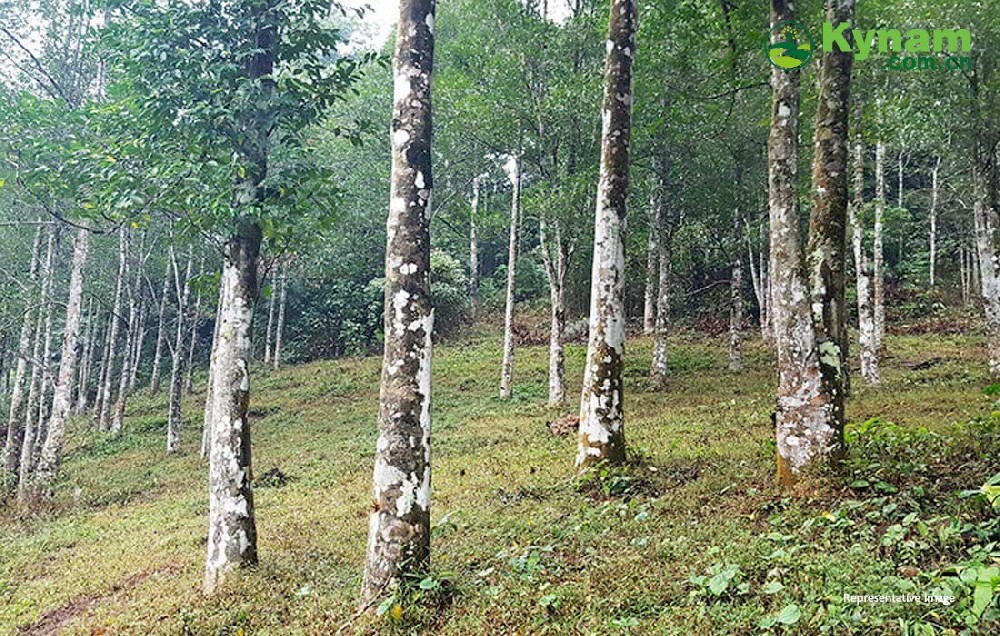
Jeypore: A rare species of agarwood tree once believed to exist only in the hills of Meghalaya has been discovered thriving in Assam’s Jeypore Reserve Forest. The tree, scientifically known as Aquilaria khasiana, is classified as Critically Endangered, and this breakthrough offers new hope for its conservation.
The discovery was made by scientists from the Botanical Survey of India, who confirmed the tree’s identity using both physical characteristics and DNA barcoding. The study also successfully decoded the tree’s complete chloroplast genome for the first time, proving a direct link between Assam’s population and the previously known trees in Meghalaya’s East Khasi Hills.
Until now, the species was thought to survive in only a few scattered patches. A rediscovery in 2016 had found just nine individuals in Meghalaya, and a more recent 2023–24 survey counted only five surviving trees in that region. In contrast, the Jeypore forest now hosts more than 200 mature individuals, representing a dramatic expansion of the species’ known habitat.
However, the excitement is tempered by caution. Genetic testing revealed that Assam’s trees show some similarities to Gyrinops walla, a related species from Sri Lanka and the Western Ghats. Experts say this taxonomic overlap warrants further investigation.
Aquilaria khasiana is prized for producing agarwood—a fragrant resin used in perfumes and incense. Its high market value has made it a frequent target for illegal harvesting, while its natural habitat continues to face threats such as deforestation, grassland decline, fire, and insect damage.
Despite the promising numbers found in Assam, scientists stress that the species remains under severe threat. Its overall population has declined by over 80% in recent decades. Conservationists recommend retaining its Critically Endangered status under IUCN guidelines and are urging both Assam and Meghalaya authorities to implement urgent protection measures and a species recovery plan.
The researchers concluded that while this rediscovery is a remarkable stroke of luck, it must be followed by action. Without immediate conservation steps, the tree’s future remains uncertain.